Buy sto.nu ?
We are moving the project
sto.nu .
Are you interested in purchasing the domain
sto.nu ?
domain@kv-gmbh.de · 0541-91531010
Buy sto.nu ?
Is taxonomy the same as systematics?
Taxonomy and systematics are related fields within biology, but they are not the same. Taxonomy is the science of naming, defining, and classifying organisms into different categories based on their similarities and differences. Systematics, on the other hand, is the study of the evolutionary relationships between different organisms, including their classification and the reconstruction of their evolutionary history. While taxonomy focuses on the naming and categorization of organisms, systematics delves deeper into understanding the evolutionary relationships and patterns among different species. **
Can one create family trees and cladograms using taxonomy?
Yes, one can create family trees and cladograms using taxonomy. Taxonomy is the science of classifying organisms into different categories based on their characteristics and evolutionary relationships. By organizing organisms into groups based on their similarities and differences, taxonomists can create family trees that show the evolutionary history and relationships between different species. Cladograms, which are branching diagrams that show these relationships, can also be constructed using taxonomic data to visually represent the evolutionary history of a group of organisms. **


Similar search terms for Taxonomy
Top-Angebote
Products related to Taxonomy:
-
Evenflo OPEN BOX Revolve360 Slim 2-in-1 Rotational Convertible Car Seat with Quick Clean Cover - StoGot a compact vehicle and a little one on the way? Check out the Evenflo Revolve360 Slim 2-in-1 Rotational Car Seat with Quick Clean Cover! We slimmed the exterior of our revolutionary car seat to create a 16.7 footprint without sacrificing your...314,99 $*Shipping: 0,00 $Secure redirect to the provider
-
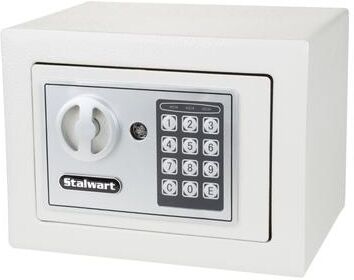
Digital Security Box - Compact Steel Combination Lock Box with Electronic Keypad - Portable Money Safe by Stalwart (Black)Whether you are storing money, jewelry, passports, or guns, the Stalwart Electronic Safety Lock Box is the perfect home safety and security system to keep your valuables secure.64,97 $*Shipping: 0,00 $Secure redirect to the provider
-
Garden Tool Organizer - Corner Storage Rack that Holds 18 Yard Tools and Broom Holder - Garage Organizers & Storage by Sto-AwayOrganize your yard and garden tools with the Yard tool corner storage rack by Trademark Home. Cluttered garden tools can be dangerous and inconvenient.29,98 $*Shipping: 0,00 $Secure redirect to the provider
-
eufy Essential Security Bundle eufy Essential Security BundleYour Home's First Line of Defense: Covers key entry points—front/back doors and main entrances—with reliable detection and stronger long-range connectivity, helping keep your home protected around the clock. Proactive Protection, Instant Alerts³:...299,99 $*Shipping: 0,00 $Secure redirect to the provider




-
Can one create phylogenetic trees and cladograms using taxonomy?
Yes, one can create phylogenetic trees and cladograms using taxonomy. Taxonomy, the science of classifying organisms based on shared characteristics, forms the basis for constructing phylogenetic trees and cladograms. By organizing organisms into groups based on their evolutionary relationships, taxonomic classifications can be used to create visual representations of these relationships in the form of phylogenetic trees and cladograms. These tools help researchers understand the evolutionary history and relatedness of different species. **
-
What is the difference between taxonomy and nomenclature in systematics?
Taxonomy is the science of classifying and naming organisms based on their characteristics and evolutionary relationships. It involves identifying, describing, and naming species, as well as organizing them into hierarchical categories like genus and family. Nomenclature, on the other hand, is the system of rules and conventions for naming organisms. It includes the specific rules for assigning scientific names to organisms, ensuring that each species has a unique and universally recognized name. In summary, taxonomy is the science of classification, while nomenclature is the system of naming within that classification system. **
-
Why does the WordPress custom taxonomy not appear in the Gutenberg editor?
The WordPress custom taxonomy does not appear in the Gutenberg editor by default because the Gutenberg editor is designed to primarily handle content creation and editing, while taxonomies are more related to organizing and categorizing content. However, developers can enable the display of custom taxonomies in the Gutenberg editor by using custom code or plugins to integrate the taxonomies into the editor interface. This allows users to easily assign and manage taxonomy terms for their content within the Gutenberg editor. **
-
How is a blockchain structured?
A blockchain is structured as a decentralized, distributed ledger that records transactions across a network of computers. Each block in the chain contains a list of transactions, a timestamp, and a reference to the previous block, creating a chronological and immutable record of all transactions. The network of computers, or nodes, work together to validate and add new blocks to the chain through a consensus mechanism, such as proof of work or proof of stake. This structure ensures that the blockchain is secure, transparent, and resistant to tampering or fraud. **

Is Web3-Blockchain really the future?
Web3-Blockchain has the potential to significantly impact the future of technology and various industries. Its decentralized nature, enhanced security, and transparency make it an attractive option for applications such as finance, supply chain management, and healthcare. However, there are still challenges and limitations to be addressed, such as scalability and energy consumption. While Web3-Blockchain shows promise, its widespread adoption and impact on the future will depend on how these challenges are addressed and how effectively it can integrate with existing systems. **
How does one become a blockchain developer?
To become a blockchain developer, one should start by gaining a strong understanding of computer science and programming languages such as C++, Java, or Solidity. It is also important to learn about blockchain technology, including its principles, protocols, and consensus mechanisms. Additionally, gaining experience with blockchain platforms and tools, such as Ethereum or Hyperledger, and participating in blockchain projects or communities can help in becoming a proficient blockchain developer. Continuous learning and staying updated with the latest developments in the field are also essential for a successful career as a blockchain developer. **
Top-Angebote
Products related to Taxonomy:
-
Nuloom Geometric Casual Natural Fiber Jute And Cotton Token Area RugMachine made in India of jute and cotton, this rug is the perfect addition to coastal, cottage, or farmhouse décor. Features: 80% Cotton, 20% Jute, made in India Crafted with love and care, hand made rugs carry the spirit of the artisans that made...333,99 $*Shipping: 0,00 $Secure redirect to the provider
-
Evenflo OPEN BOX Revolve360 Slim 2-in-1 Rotational Convertible Car Seat with Quick Clean Cover - StoGot a compact vehicle and a little one on the way? Check out the Evenflo Revolve360 Slim 2-in-1 Rotational Car Seat with Quick Clean Cover! We slimmed the exterior of our revolutionary car seat to create a 16.7 footprint without sacrificing your...314,99 $*Shipping: 0,00 $Secure redirect to the provider
-
Digital Security Box - Compact Steel Combination Lock Box with Electronic Keypad - Portable Money Safe by Stalwart (Black)Whether you are storing money, jewelry, passports, or guns, the Stalwart Electronic Safety Lock Box is the perfect home safety and security system to keep your valuables secure.64,97 $*Shipping: 0,00 $Secure redirect to the provider
-
Is taxonomy the same as systematics?
Taxonomy and systematics are related fields within biology, but they are not the same. Taxonomy is the science of naming, defining, and classifying organisms into different categories based on their similarities and differences. Systematics, on the other hand, is the study of the evolutionary relationships between different organisms, including their classification and the reconstruction of their evolutionary history. While taxonomy focuses on the naming and categorization of organisms, systematics delves deeper into understanding the evolutionary relationships and patterns among different species. **
-
Can one create family trees and cladograms using taxonomy?
Yes, one can create family trees and cladograms using taxonomy. Taxonomy is the science of classifying organisms into different categories based on their characteristics and evolutionary relationships. By organizing organisms into groups based on their similarities and differences, taxonomists can create family trees that show the evolutionary history and relationships between different species. Cladograms, which are branching diagrams that show these relationships, can also be constructed using taxonomic data to visually represent the evolutionary history of a group of organisms. **
-
Can one create phylogenetic trees and cladograms using taxonomy?
Yes, one can create phylogenetic trees and cladograms using taxonomy. Taxonomy, the science of classifying organisms based on shared characteristics, forms the basis for constructing phylogenetic trees and cladograms. By organizing organisms into groups based on their evolutionary relationships, taxonomic classifications can be used to create visual representations of these relationships in the form of phylogenetic trees and cladograms. These tools help researchers understand the evolutionary history and relatedness of different species. **
-
What is the difference between taxonomy and nomenclature in systematics?
Taxonomy is the science of classifying and naming organisms based on their characteristics and evolutionary relationships. It involves identifying, describing, and naming species, as well as organizing them into hierarchical categories like genus and family. Nomenclature, on the other hand, is the system of rules and conventions for naming organisms. It includes the specific rules for assigning scientific names to organisms, ensuring that each species has a unique and universally recognized name. In summary, taxonomy is the science of classification, while nomenclature is the system of naming within that classification system. **
Similar search terms for Taxonomy
-
Garden Tool Organizer - Corner Storage Rack that Holds 18 Yard Tools and Broom Holder - Garage Organizers & Storage by Sto-AwayOrganize your yard and garden tools with the Yard tool corner storage rack by Trademark Home. Cluttered garden tools can be dangerous and inconvenient.29,98 $*Shipping: 0,00 $Secure redirect to the provider
-
eufy Essential Security Bundle eufy Essential Security BundleYour Home's First Line of Defense: Covers key entry points—front/back doors and main entrances—with reliable detection and stronger long-range connectivity, helping keep your home protected around the clock. Proactive Protection, Instant Alerts³:...299,99 $*Shipping: 0,00 $Secure redirect to the provider
-
Trademark Home Digital Security Box - Compact Steel Lock Box with Electronic Keypad - Portable Safe for Cash, Jewelry by Stalwart (Gray)Whether you are storing money, jewelry, passports, or guns, the Digital Security Safe Box by Stalwart is the perfect security system to keep your valuables protected.48,59 $*Shipping: 0,00 $Secure redirect to the provider
-
Why does the WordPress custom taxonomy not appear in the Gutenberg editor?
The WordPress custom taxonomy does not appear in the Gutenberg editor by default because the Gutenberg editor is designed to primarily handle content creation and editing, while taxonomies are more related to organizing and categorizing content. However, developers can enable the display of custom taxonomies in the Gutenberg editor by using custom code or plugins to integrate the taxonomies into the editor interface. This allows users to easily assign and manage taxonomy terms for their content within the Gutenberg editor. **
-
How is a blockchain structured?
A blockchain is structured as a decentralized, distributed ledger that records transactions across a network of computers. Each block in the chain contains a list of transactions, a timestamp, and a reference to the previous block, creating a chronological and immutable record of all transactions. The network of computers, or nodes, work together to validate and add new blocks to the chain through a consensus mechanism, such as proof of work or proof of stake. This structure ensures that the blockchain is secure, transparent, and resistant to tampering or fraud. **
-
Is Web3-Blockchain really the future?
Web3-Blockchain has the potential to significantly impact the future of technology and various industries. Its decentralized nature, enhanced security, and transparency make it an attractive option for applications such as finance, supply chain management, and healthcare. However, there are still challenges and limitations to be addressed, such as scalability and energy consumption. While Web3-Blockchain shows promise, its widespread adoption and impact on the future will depend on how these challenges are addressed and how effectively it can integrate with existing systems. **
-
How does one become a blockchain developer?
To become a blockchain developer, one should start by gaining a strong understanding of computer science and programming languages such as C++, Java, or Solidity. It is also important to learn about blockchain technology, including its principles, protocols, and consensus mechanisms. Additionally, gaining experience with blockchain platforms and tools, such as Ethereum or Hyperledger, and participating in blockchain projects or communities can help in becoming a proficient blockchain developer. Continuous learning and staying updated with the latest developments in the field are also essential for a successful career as a blockchain developer. **
* All prices are inclusive of VAT and, if applicable, plus shipping costs. The offer information is based on the details provided by the respective shop and is updated through automated processes. Real-time updates do not occur, so deviations can occur in individual cases. ** Note: Parts of this content were created by AI.