Buy sto.nu ?
We are moving the project
sto.nu .
Are you interested in purchasing the domain
sto.nu ?
domain@kv-gmbh.de · 0541-91531010
Buy sto.nu ?
What is an orthogonal vector?
An orthogonal vector is a vector that is perpendicular to another vector. In other words, two vectors are orthogonal if their dot product is zero. Geometrically, this means that the two vectors form a 90-degree angle with each other. Orthogonal vectors are important in many areas of mathematics and physics, including linear algebra and vector calculus. **
What does the term orthogonal mean?
The term orthogonal refers to two things being perpendicular or at right angles to each other. In mathematics, it often refers to vectors or matrices that are perpendicular to each other. In a broader sense, it can also refer to any two things that are independent or unrelated to each other. **
Similar search terms for Orthogonal
Top-Angebote
Products related to Orthogonal:
-
eufy Essential Security Bundle eufy Essential Security BundleYour Home's First Line of Defense: Covers key entry points—front/back doors and main entrances—with reliable detection and stronger long-range connectivity, helping keep your home protected around the clock. Proactive Protection, Instant Alerts³:...299,99 $*Shipping: 0,00 $Secure redirect to the provider
-
Garden Tool Organizer - Corner Storage Rack that Holds 18 Yard Tools and Broom Holder - Garage Organizers & Storage by Sto-AwayOrganize your yard and garden tools with the Yard tool corner storage rack by Trademark Home. Cluttered garden tools can be dangerous and inconvenient.29,98 $*Shipping: 0,00 $Secure redirect to the provider
-
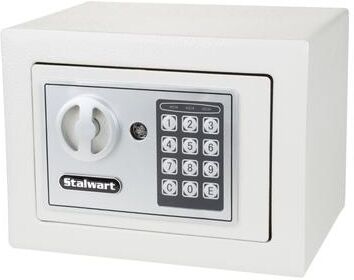
Trademark Home Digital Security Box - Compact Steel Lock Box with Electronic Keypad - Portable Safe for Cash, Jewelry by Stalwart (Gray)Whether you are storing money, jewelry, passports, or guns, the Digital Security Safe Box by Stalwart is the perfect security system to keep your valuables protected.48,59 $*Shipping: 0,00 $Secure redirect to the provider



-
Are linearly independent vectors always orthogonal?
No, linearly independent vectors are not always orthogonal. Linear independence means that no vector in the set can be written as a linear combination of the others, while orthogonality means that the vectors are perpendicular to each other. It is possible for linearly independent vectors to be orthogonal, but it is not a guarantee. For example, in three-dimensional space, the vectors (1, 0, 0), (0, 1, 0), and (0, 0, 1) are linearly independent and orthogonal, but the vectors (1, 1, 0) and (0, 1, 1) are linearly independent but not orthogonal. **
-
When are planes and lines orthogonal?
Planes and lines are orthogonal when the line is perpendicular to the plane. This means that the line forms a 90-degree angle with the plane, creating a right angle. In other words, the direction of the line is perpendicular to the direction of the plane. This relationship is important in geometry and engineering, as it affects the intersection and orientation of different geometric elements. **
-
What is a proof of two orthogonal?
Two vectors are considered orthogonal if their dot product is equal to zero. This means that the angle between the two vectors is 90 degrees, forming a right angle. Mathematically, if vectors u and v are orthogonal, then u · v = 0. This property can be used to prove that two vectors are orthogonal by calculating their dot product and showing that it equals zero. **
-
What is a proof for two orthogonal?
Two vectors are orthogonal if their dot product is zero. This can be proven by calculating the dot product of the two vectors and showing that it equals zero. If the dot product is zero, it means that the vectors are perpendicular to each other, which is the definition of orthogonality in Euclidean space. **


How do you calculate the orthogonal complement?
To calculate the orthogonal complement of a subspace, you first need to find a basis for the subspace. Then, you can use the Gram-Schmidt process to find an orthonormal basis for the subspace. Finally, the orthogonal complement is the set of all vectors in the vector space that are orthogonal to every vector in the orthonormal basis of the subspace. **
How do you determine the orthogonal complement?
To determine the orthogonal complement of a subspace, you first need to find a basis for the subspace. Then, you can use the Gram-Schmidt process to find an orthogonal basis for the subspace. Finally, the orthogonal complement is the set of all vectors in the vector space that are orthogonal to every vector in the basis of the subspace. **
Top-Angebote
Products related to Orthogonal:
-
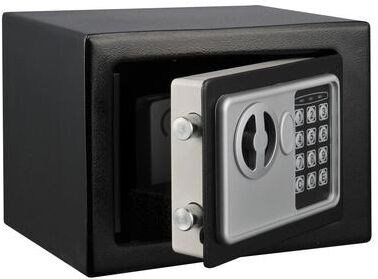
Digital Security Box - Compact Steel Combination Lock Box with Electronic Keypad - Portable Money Safe by Stalwart (Black)Whether you are storing money, jewelry, passports, or guns, the Stalwart Electronic Safety Lock Box is the perfect home safety and security system to keep your valuables secure.64,97 $*Shipping: 0,00 $Secure redirect to the provider
-
eufy Essential Security Bundle eufy Essential Security BundleYour Home's First Line of Defense: Covers key entry points—front/back doors and main entrances—with reliable detection and stronger long-range connectivity, helping keep your home protected around the clock. Proactive Protection, Instant Alerts³:...299,99 $*Shipping: 0,00 $Secure redirect to the provider
-
Garden Tool Organizer - Corner Storage Rack that Holds 18 Yard Tools and Broom Holder - Garage Organizers & Storage by Sto-AwayOrganize your yard and garden tools with the Yard tool corner storage rack by Trademark Home. Cluttered garden tools can be dangerous and inconvenient.29,98 $*Shipping: 0,00 $Secure redirect to the provider
-
What is an orthogonal vector?
An orthogonal vector is a vector that is perpendicular to another vector. In other words, two vectors are orthogonal if their dot product is zero. Geometrically, this means that the two vectors form a 90-degree angle with each other. Orthogonal vectors are important in many areas of mathematics and physics, including linear algebra and vector calculus. **
-
What does the term orthogonal mean?
The term orthogonal refers to two things being perpendicular or at right angles to each other. In mathematics, it often refers to vectors or matrices that are perpendicular to each other. In a broader sense, it can also refer to any two things that are independent or unrelated to each other. **
-
Are linearly independent vectors always orthogonal?
No, linearly independent vectors are not always orthogonal. Linear independence means that no vector in the set can be written as a linear combination of the others, while orthogonality means that the vectors are perpendicular to each other. It is possible for linearly independent vectors to be orthogonal, but it is not a guarantee. For example, in three-dimensional space, the vectors (1, 0, 0), (0, 1, 0), and (0, 0, 1) are linearly independent and orthogonal, but the vectors (1, 1, 0) and (0, 1, 1) are linearly independent but not orthogonal. **
-
When are planes and lines orthogonal?
Planes and lines are orthogonal when the line is perpendicular to the plane. This means that the line forms a 90-degree angle with the plane, creating a right angle. In other words, the direction of the line is perpendicular to the direction of the plane. This relationship is important in geometry and engineering, as it affects the intersection and orientation of different geometric elements. **
Similar search terms for Orthogonal
-
Trademark Home Digital Security Box - Compact Steel Lock Box with Electronic Keypad - Portable Safe for Cash, Jewelry by Stalwart (Gray)Whether you are storing money, jewelry, passports, or guns, the Digital Security Safe Box by Stalwart is the perfect security system to keep your valuables protected.48,59 $*Shipping: 0,00 $Secure redirect to the provider
-
eufy Security SoloCam E30360° Vision, Every Corner in Sight: Enjoy comprehensive coverage with a wide viewing angle, minimizing blind spots and allowing you to monitor your front porch, yard, or even your driveway. AI Motion Detection and Smart Tracking: Built-in AI instantly detects and automatically tracks people, vehicles, or important events within view, minimizing false alarms and keeping your property secure. Stay Charged With Forever Power: With a removable solar panel for flexible installation, just 2 hours of daily sun keeps SoloCam E30 charged. SolarPlus technology gives you always-on security and constant peace of mind. Enhanced 2K Clarity Day and Night: Experience crystal-clear 2K clarity day and night, capturing every detail that matters. With an f/1.6 aperture and 2K resolution, SoloCam E30 always ensures superior image quality. No Monthly Fee: Your footage is stored locally to keep it private. Use a microSD card up to 128 GB in size (microSD card not included) and enjoy no monthly fees.79,99 £*Shipping: 0,00 £Secure redirect to the provider
-
eufy Security Simple ChimeMade for eufy Video Doorbells: Works seamlessly with eufy video doorbells to deliver reliable ringing and notifications throughout your home so you never miss a vistor. For a detailed compatibility list, see the FAQ. Choose from 10 Chimes: 10 pre-installed chimes let you find the sound that suits you and your family. Stable Dual-Band Connection: Enjoy faster speeds, reduced network congestion, and smooth performance at all times with advanced 2.4 GHz and 5 GHz dual-band Wi-Fi connectivity. Quick and Easy Setup: Supports auto-discovery and effortless network integration with Bluetooth auto-pairing, enabling you to set it up within minutes. Loud and Reliable Alerts: Adjust the volume of your chime to up to 80 dB for powerful and dependable alerts so you hear visitor notifications clearly even from the second floor or across larger spaces.22,99 £*Shipping: 0,00 £Secure redirect to the provider
-
What is a proof of two orthogonal?
Two vectors are considered orthogonal if their dot product is equal to zero. This means that the angle between the two vectors is 90 degrees, forming a right angle. Mathematically, if vectors u and v are orthogonal, then u · v = 0. This property can be used to prove that two vectors are orthogonal by calculating their dot product and showing that it equals zero. **
-
What is a proof for two orthogonal?
Two vectors are orthogonal if their dot product is zero. This can be proven by calculating the dot product of the two vectors and showing that it equals zero. If the dot product is zero, it means that the vectors are perpendicular to each other, which is the definition of orthogonality in Euclidean space. **
-
How do you calculate the orthogonal complement?
To calculate the orthogonal complement of a subspace, you first need to find a basis for the subspace. Then, you can use the Gram-Schmidt process to find an orthonormal basis for the subspace. Finally, the orthogonal complement is the set of all vectors in the vector space that are orthogonal to every vector in the orthonormal basis of the subspace. **
-
How do you determine the orthogonal complement?
To determine the orthogonal complement of a subspace, you first need to find a basis for the subspace. Then, you can use the Gram-Schmidt process to find an orthogonal basis for the subspace. Finally, the orthogonal complement is the set of all vectors in the vector space that are orthogonal to every vector in the basis of the subspace. **
* All prices are inclusive of VAT and, if applicable, plus shipping costs. The offer information is based on the details provided by the respective shop and is updated through automated processes. Real-time updates do not occur, so deviations can occur in individual cases. ** Note: Parts of this content were created by AI.